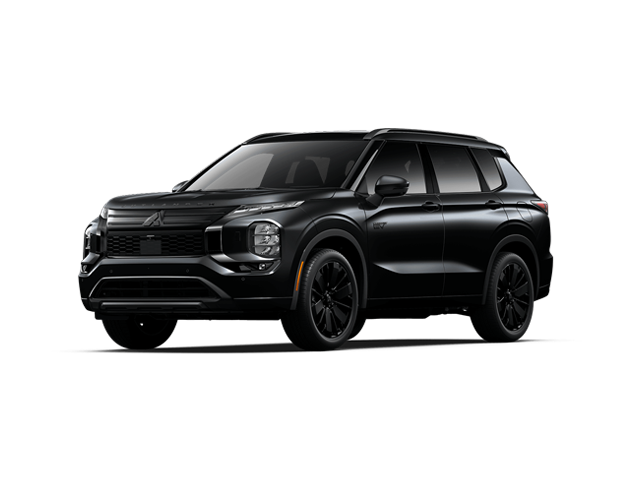
Off-Road Drive Modes and S-AWC: What the Rugged 2027 Mitsubishi Outlander Adds
Gravel roads, cottage laneways, and rain-slicked highways are part of daily life across Ontario. If you’re weighing a...


Thunder Bay Mitsubishi
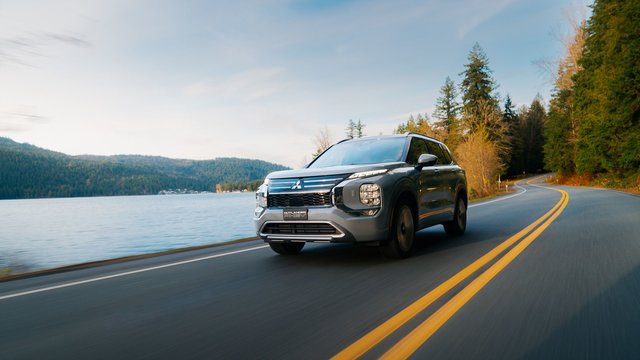
The 2026 Mitsubishi Outlander PHEV brings a meaningfully upgraded powertrain to Canada's best-selling plug-in hybrid vehicle. The headline numbers are straightforward: a new 22.7 kWh battery, 72 km of EV-only range, and a total combined driving range of 690 km. Those figures place the 2026 Outlander PHEV ahead of where the previous generation sat, and they reflect a broader update to the charging system, efficiency ratings, and the vehicle's overall electric capability.
For buyers who have been weighing the PHEV against the gas-only Outlander or other plug-in SUVs, the 2026 powertrain addresses the most common questions head-on: how far can it go on electricity alone, how does it perform, and how does the system actually work from day to day? This article covers all of it.
The 2026 Outlander PHEV's new 22.7 kWh lithium-ion battery replaces the previous 20 kWh unit, an increase of 2.7 kWh. That added capacity is the direct source of the EV range improvement: from 61 km in the previous edition to 72 km in the 2026 model, an 18% jump.
For daily driving, 72 km of electric-only range covers the average Canadian commute round-trip without touching the gas engine. A driver commuting 30 km each way can complete the full workday drive on electricity alone, with margin to spare. The 22.7 kWh battery also operates at 350 volts, enabling both Level 2 and DC Quick Charge capability as standard equipment.
Battery highlights:
The Outlander PHEV uses a twin AC synchronous permanent magnetic motor system: a 114 HP front motor and a 134 HP rear motor. Working together in POWER mode, the combined output is 248 HP with a total torque output of 332 lb-ft. The front and rear motors generate 188 lb-ft and 144 lb-ft respectively.
This twin-motor arrangement is the foundation of the Outlander PHEV's S-AWC system. Because each motor operates independently on its respective axle, torque can be distributed between front and rear wheels with precision that a traditional mechanical driveshaft cannot match. In normal driving, this means better traction in slippery or uneven conditions. In POWER mode, it means a noticeably faster off-the-line response.
The new battery's increased capacity has also increased EV power output compared to the previous edition, contributing to improved acceleration across all operating modes.

The gasoline engine in the 2026 Outlander PHEV is a 2.4L 4-cylinder unit producing 131 HP at 5,000 RPM and 144 lb-ft of torque at 4,300 RPM. This engine does not drive the wheels directly in most situations. Instead, it operates as a generator or supplements the electric motors depending on the driving mode and battery state.
The PHEV system automatically selects between three operating modes:
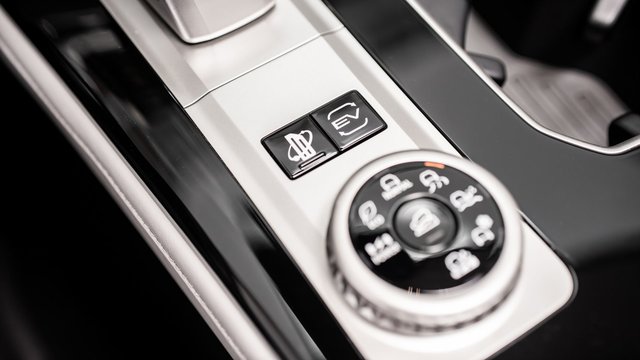
Beyond the automatic system, drivers can select from seven modes: ECO, Normal, Tarmac, Snow, Mud, Gravel, and POWER. Each mode adjusts the balance between the gas engine, electric motors, and S-AWC torque distribution to suit the terrain or driving situation.
The 2026 Outlander PHEV's combined gas and electric efficiency is rated at 3.2 Le/100 km, an improvement over the previous edition. Gas-only efficiency is rated at 8.6 L/100 km for both city and highway driving, based on Natural Resources Canada's testing methodology.
The 690 km total driving range is calculated across the full combination of electric and gasoline operation. For drivers who charge regularly at home or at work, the real-world fuel cost of ownership drops considerably compared to the gas-only figure, since most daily driving stays within the 72 km electric range.
|
Efficiency Metric |
2026 Outlander PHEV |
|---|---|
|
EV-Only Range |
72 km |
|
Total Combined Range |
690 km |
|
Combined (Gas + Electric) |
3.2 Le/100 km |
|
Gas-Only (City/Highway) |
8.6 L/100 km |
|
Battery Capacity |
22.7 kWh |
The 2026 Outlander PHEV supports three charging methods as standard equipment on all trims:
The 29-minute DC quick charge time to 80% capacity is a notable update from the previous generation's 38-minute figure. For drivers who have access to a CHAdeMO quick charger, this means a meaningful top-up is possible during a lunch break or a stop at a shopping centre.
The system also includes engine-based charge capability: the gas engine can charge the battery to 80% in approximately 94 minutes while the vehicle is stationary.
Additional energy recovery features include regenerative braking through paddle shifters, which allow the driver to adjust the level of energy recapture and deceleration, and the Innovative Pedal one-pedal driving mode.
All seven 2026 Outlander PHEV trims include the S-AWC drivetrain and the full electric powertrain described above. The ES S-AWC is the entry trim and qualifies for the $2,500 Federal Electric Vehicle Affordability Program rebate, making it the most accessible entry point into the 2026 PHEV lineup.
The full PHEV lineup spans ES S-AWC, SE S-AWC, LE S-AWC, SEL S-AWC, GT S-AWC, GT PREMIUM S-AWC, and GT NOIR S-AWC.
The 2026 Outlander PHEV is covered by Mitsubishi's 10-year/160,000 km Powertrain Limited Warranty, a 10-year/160,000 km Lithium-Ion Battery Limited Warranty, a 5-year/100,000 km New Vehicle Limited Warranty, and 5-year/unlimited km Roadside Assistance.
The team at Thunder Bay Mitsubishi can walk you through the 2026 Outlander PHEV powertrain, all seven trim levels, and the federal rebate eligibility in detail. Stop in to learn more about the 72 km EV range and what it means for your daily driving.
Gravel roads, cottage laneways, and rain-slicked highways are part of daily life across Ontario. If you’re weighing a...
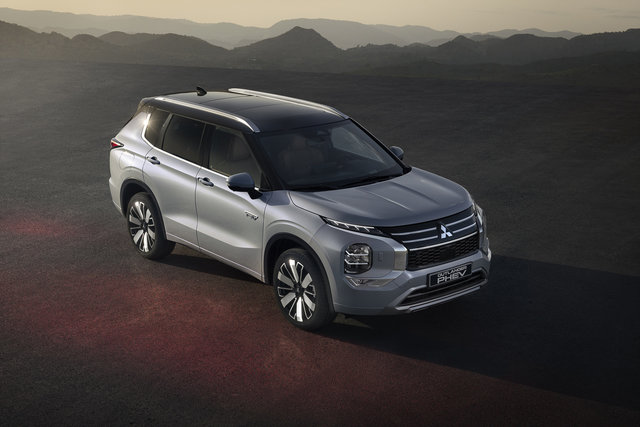
A plug-in hybrid three-row SUV sounds like a commuter vehicle first and a trailer-hauler second. If you’re weighing the...
Choosing a subcompact SUV trim often comes down to one question: which safety and convenience systems actually come...