
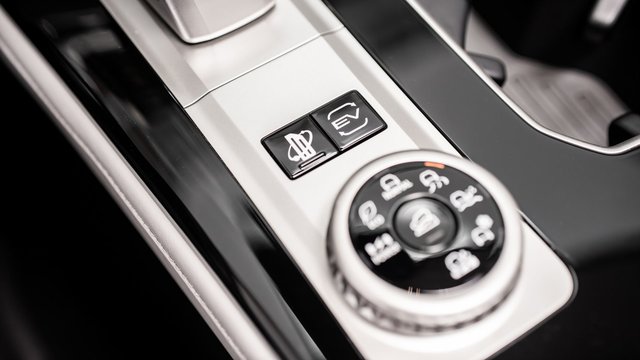
Off-Road Drive Modes and S-AWC: What the Rugged 2027 Mitsubishi Outlander Adds
Gravel roads, cottage laneways, and rain-slicked highways are part of daily life across Ontario. If you’re weighing a...


Thunder Bay Mitsubishi
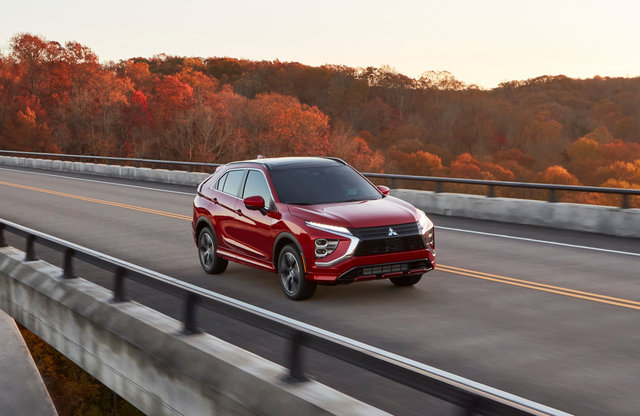
July driving in Ontario rarely stays predictable. One stretch of highway is dry and sunlit, the next has a rain squall rolling through, and a turn onto a cottage road switches the surface to gravel within a few kilometres.
The 2026 Mitsubishi Eclipse Cross comes with Super All-Wheel Control (S-AWC) as standard equipment. It’s built to adjust to exactly this kind of shifting road surface, without asking the driver to do anything extra.
S-AWC is Mitsubishi’s all-wheel drive system, standard on the ES, SE, GT, and NOIR trims of the 2026 Eclipse Cross. Instead of running a single fixed setting, it offers three selectable drive modes: Normal, Snow, and Gravel.
Each mode changes how the system manages traction and stability for the road ahead. The same vehicle can handle a dry commute, a slick shoulder-season morning, or an unpaved lane, with a setting matched to it.
Normal mode is the default setting for most driving. It delivers well-balanced four-wheel dynamics that favour fuel efficiency, traction, high-speed stability, and predictable handling on typical paved roads.
Snow mode adjusts the system for snow-covered or slippery surfaces, improving traction and stability when grip drops. Gravel mode is tuned for coarser or unpaved roads, delivering maximum traction on rough terrain.
S-AWC also works alongside Active Stability Control (ASC), Traction Control Logic (TCL), and Hill Start Assist, all standard on every trim. Together they help keep the Eclipse Cross composed when grip changes suddenly, such as a wet patch mid-corner or a soft gravel shoulder.
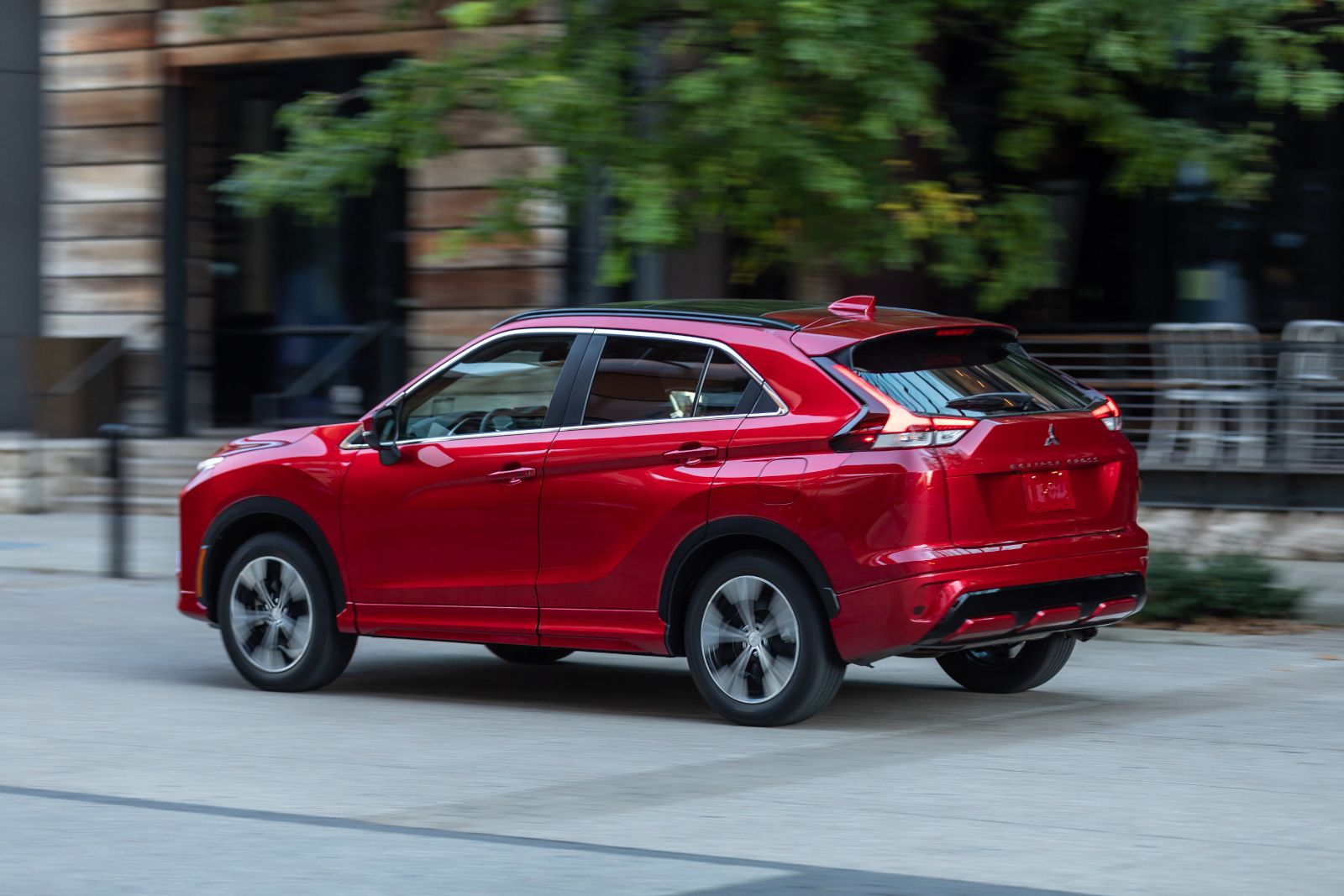
A July drive around Northwestern Ontario can move through more than one road condition in a single trip. Dry pavement gives way to a sudden downpour, and a paved route can turn to gravel near a cottage access road.
Normal mode is built to hold traction and stability through those changes without the driver switching settings for a passing shower. Gravel mode becomes useful the moment pavement ends, and Snow mode stays ready for cooler mornings later in the season.
The GT trim’s turbocharged 1.5 L four-cylinder engine produces 152 hp and 184 lb-ft of torque through a Continuously Variable Transmission, giving S-AWC responsive power to send where it’s needed. A ground clearance of 215 mm and towing capacity up to 2,000 lbs (907 kg) round out the Eclipse Cross’s ability to handle a gravel route and a light trailer on the same weekend.
Because S-AWC is standard from the ES through the GT and NOIR, the trim decision comes down to comfort, technology, and styling rather than traction. A buyer choosing the value-focused ES gets the same drive-mode system as a buyer stepping up to the NOIR.
That matters most for commuters who mix highway and secondary roads, and for anyone regularly driving cottage or work routes as pavement, gravel, and weather change from one stretch to the next. Drivers don’t need to plan around the vehicle’s traction system; they only need to pick the mode that matches the road they’re on.
S-AWC is one of the standard systems that lets the 2026 Mitsubishi Eclipse Cross adjust to Ontario’s changing summer roads, from dry highway stretches to gravel shoulders, using drive modes tuned for each surface.
Visit Thunder Bay Mitsubishi in Thunder Bay to test-drive the 2026 Eclipse Cross and feel how the Normal, Snow, and Gravel modes respond on a short mixed-surface route with the sales team.
Gravel roads, cottage laneways, and rain-slicked highways are part of daily life across Ontario. If you’re weighing a...

A plug-in hybrid three-row SUV sounds like a commuter vehicle first and a trailer-hauler second. If you’re weighing the...
Choosing a subcompact SUV trim often comes down to one question: which safety and convenience systems actually come...