Off-Road Drive Modes and S-AWC: What the Rugged 2027 Mitsubishi Outlander Adds
Gravel roads, cottage laneways, and rain-slicked highways are part of daily life across Ontario. If you’re weighing a...


Thunder Bay Mitsubishi
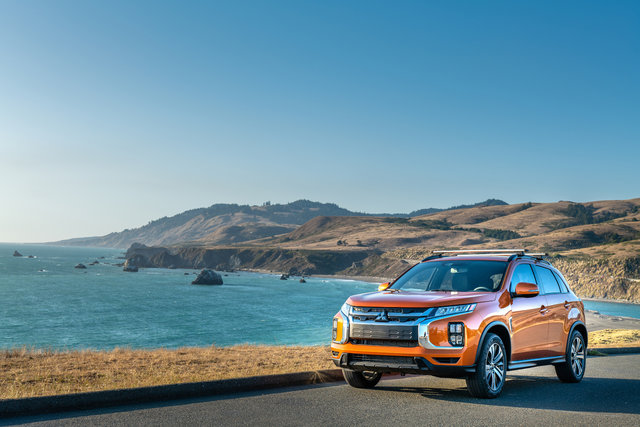
Choosing a subcompact SUV trim often comes down to one question: which safety and convenience systems actually come standard, and at what point in the lineup. The 2026 Mitsubishi RVR spreads its driver-assist technology across six trims, and the gaps between them aren’t always obvious from a spec sheet.
For Ontario drivers navigating busy parking lots, merging traffic, and long highway stretches, knowing which trim adds blind-spot monitoring or forward collision mitigation changes the decision.
The 2026 RVR runs six trims, all built on the same core structure with a clear technology and driveline progression:
Across ES AWC, SE AWC, SEL AWC, NOIR AWC, and GT AWC, the RVR carries the same core safety architecture: seven airbags, a driver’s knee airbag, Active Stability Control, Traction Control Logic, RISE body construction, and a tire pressure monitoring system. What changes trim to trim is how much gets layered on top.
ES FWD and ES AWC carry the RVR’s baseline convenience package: an 8-inch touchscreen with Android Auto and Apple CarPlay, a rearview camera, heated front seats, automatic climate control, and cruise control, all standard. Neither trim adds Blind Spot Warning or Rear Cross Traffic Alert; those arrive further up the ladder.
The real decision between these two is the driveline. ES FWD’s 2.0L four-cylinder returns a combined 8.8 L/100 km, while ES AWC uses the same 148 hp, 145 lb-ft engine paired with Mitsubishi’s All-Wheel Control and returns 9.2 L/100 km. That’s a modest efficiency trade for full-time all-wheel traction, useful on Ontario’s rural roads and longer highway stretches.
Buyers who mostly drive in town can stick with FWD to save on fuel; anyone covering longer routes gains a real margin from AWC.
Skip these two trims if the extended driver-assist suite matters more than price. That coverage starts at the next trim up.
SE AWC is the first trim to add Blind Spot Warning and Rear Cross Traffic Alert on top of the baseline safety systems. It also steps up to the 2.4L four-cylinder engine, producing 168 hp and 167 lb-ft of torque versus the ES trims’ 148 hp and 145 lb-ft, along with 16-inch alloy wheels and a premium fabric interior with three USB ports.
For daily commuting and parking-lot manoeuvring, this is the stage at which the RVR starts watching the spaces a mirror can’t cover. Combined fuel economy settles at 9.4 L/100 km, a small step up from ES AWC in exchange for the added assist systems and engine output.
SEL AWC carries the same Blind Spot Warning and Rear Cross Traffic Alert suite introduced on SE AWC, paired with the 2.4L four-cylinder engine and identical 614 L/1,402 L cargo figures. It’s the straightforward middle step: the safety case for moving past ES AWC without paying for a styling package.
NOIR AWC runs that same driver-assist foundation but layers on a panoramic fixed glass sunroof, black-out exterior trim, 18-inch alloy wheels, microsuede and synthetic-leather seating, and six-speaker audio. The choice between the two comes down to presentation and comfort, not safety coverage. Buyers who want the tech without the black-out look can stop at SEL AWC; those who want the styling on top of it move to NOIR AWC.
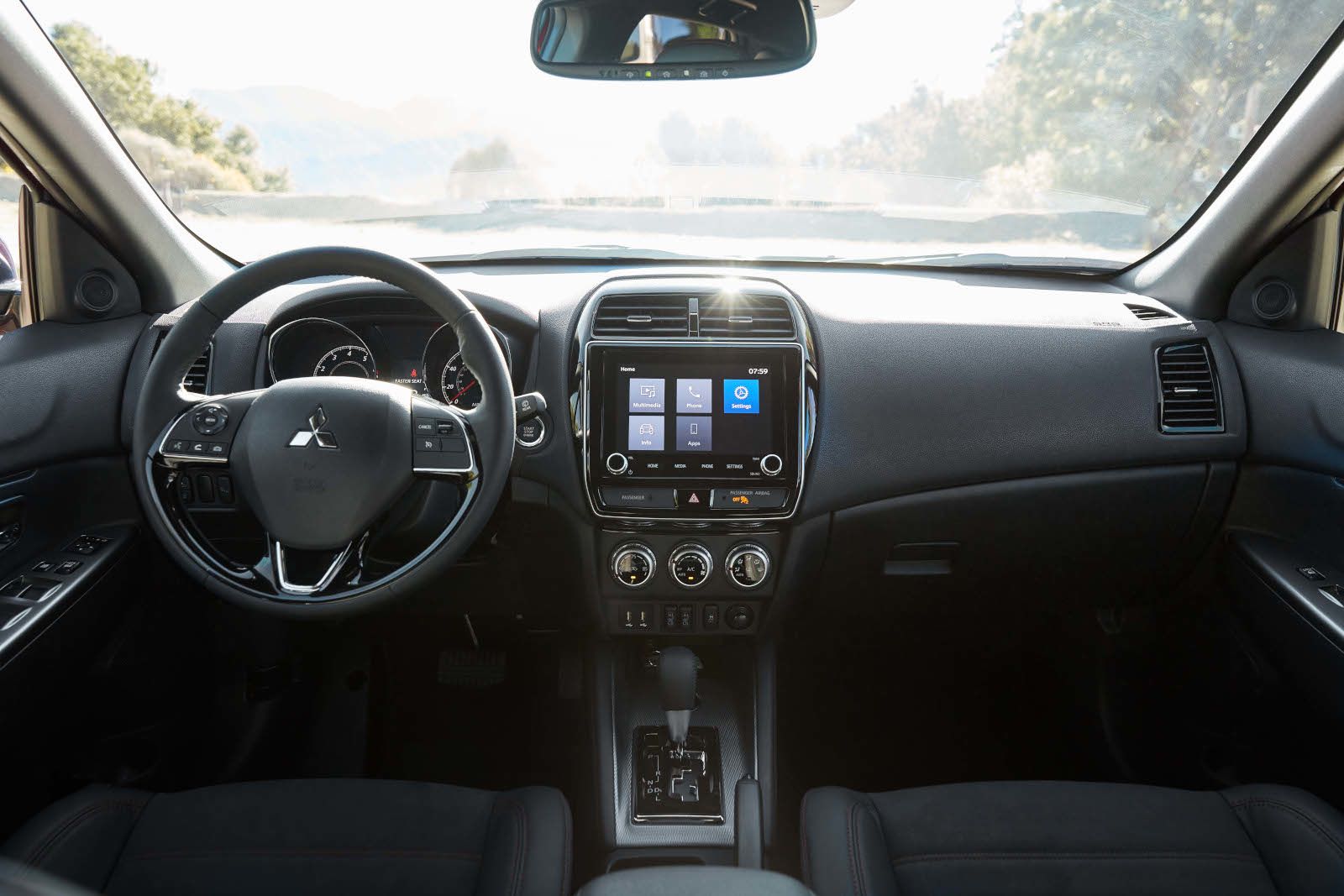
GT AWC adds Lane Departure Warning and Forward Collision Mitigation to the Blind Spot Warning and Rear Cross Traffic Alert carried over from SE AWC, SEL AWC, and NOIR AWC. It’s the only RVR trim with all four systems standard, making it the pick for highway-heavy driving.
GT AWC also carries leather-appointed seating, nine-speaker audio, LED fog lights, auto LED high beams, and the same 2.4L four-cylinder, 168 hp powertrain as the AWC trims below it. Cargo volume behind the rear seats runs slightly tighter at 569 L, compared with 614 L on the other AWC trims.
|
Spec |
ES FWD |
ES AWC |
SE AWC |
SEL AWC |
NOIR AWC |
GT AWC |
|
Engine |
2.0L 4-cyl |
2.0L 4-cyl |
2.4L 4-cyl |
2.4L 4-cyl |
2.4L 4-cyl |
2.4L 4-cyl |
|
Horsepower |
148 hp |
148 hp |
168 hp |
168 hp |
168 hp |
168 hp |
|
Torque |
145 lb-ft |
145 lb-ft |
167 lb-ft |
167 lb-ft |
167 lb-ft |
167 lb-ft |
|
Drivetrain |
FWD |
AWC (AWD) |
AWC (AWD) |
AWC (AWD) |
AWC (AWD) |
AWC (AWD) |
|
Fuel Economy (combined) |
8.8 L/100 km |
9.2 L/100 km |
9.4 L/100 km |
9.4 L/100 km |
9.4 L/100 km |
9.4 L/100 km |
|
Cargo Volume (rear seats up) |
614 L |
614 L |
614 L |
614 L |
614 L |
569 L |
|
Driver-Assist Suite |
Baseline |
Baseline |
+BSW, RCTA |
+BSW, RCTA |
+BSW, RCTA |
+BSW, RCTA, LDW, FCM |
|
Powertrain Warranty |
160,000 km / 120 mo |
160,000 km / 120 mo |
160,000 km / 120 mo |
160,000 km / 120 mo |
160,000 km / 120 mo |
160,000 km / 120 mo |
For buyers who want the RVR’s core safety net (seven airbags, stability control, traction control) without paying for extended driver-assist tech, ES FWD or ES AWC covers the essentials. Choose FWD for lower combined fuel use, AWC for extra traction on longer or rural routes.
For a balance of tech and value, SE AWC and SEL AWC add blind-spot and cross-traffic coverage that matters most in daily commuting and parking. This is the point where the RVR starts actively watching your blind spots, useful in busy Ontario traffic and tight parking lots.
For buyers who want the fullest equipment and the widest driver-assist coverage, NOIR AWC and GT AWC sit at the top. GT AWC alone adds lane departure and forward collision warning, worth the step up for anyone doing regular highway driving, since an extra second of warning counts on wet or slick pavement through the colder months.
The 2026 RVR’s driver-assist coverage widens in clear stages, from ES FWD’s baseline stability and airbag protection to GT AWC’s full set of blind-spot, cross-traffic, lane-departure, and forward-collision systems. Every named trim shares the same core safety architecture underneath.
Visit Thunder Bay Mitsubishi in Thunder Bay to compare the 2026 RVR trims side by side and confirm which driver-assist features come standard on the exact vehicle you’re considering.
Gravel roads, cottage laneways, and rain-slicked highways are part of daily life across Ontario. If you’re weighing a...
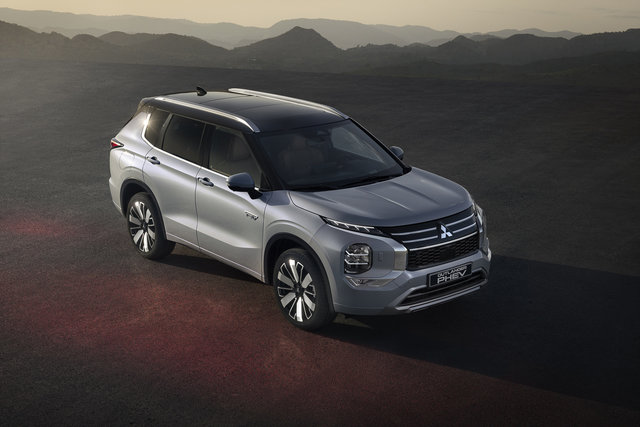
A plug-in hybrid three-row SUV sounds like a commuter vehicle first and a trailer-hauler second. If you’re weighing the...
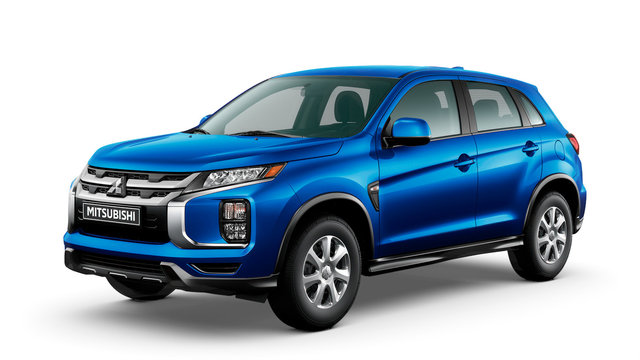
Ontario shoppers cross-shopping the 2026 Mitsubishi RVR often land on the same question: does the ES already cover what...