Off-Road Drive Modes and S-AWC: What the Rugged 2027 Mitsubishi Outlander Adds
Gravel roads, cottage laneways, and rain-slicked highways are part of daily life across Ontario. If you’re weighing a...


Thunder Bay Mitsubishi
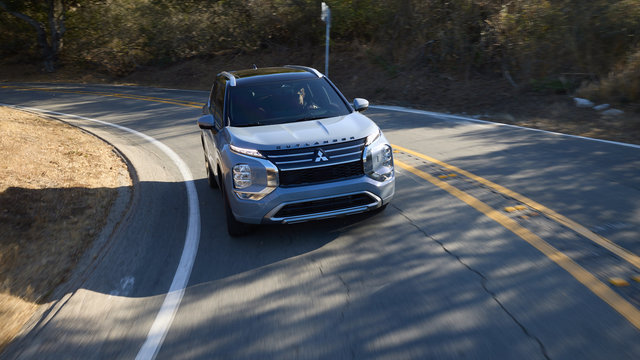
The 2026 Mitsubishi Outlander and 2026 Mitsubishi Outlander PHEV look like close siblings from the outside, but under the hood they take very different approaches to getting you down the road. One runs on a new 1.5L turbocharged mild-hybrid powertrain. The other combines a 2.4L engine with a 22.7 kWh battery and twin electric motors. For Thunder Bay drivers weighing their everyday commute, weekend trips, and longer hauls up Highway 11 or out toward Kenora, the question is which one fits your life best.
This comparison walks through the verified differences between the two 2026 Outlander models — what you gain, what you give up, and which one makes more sense for different driving patterns. All specs come straight from Mitsubishi Canada's 2026 documentation.
|
Specification |
2026 Outlander |
2026 Outlander PHEV |
|---|---|---|
|
Powertrain |
1.5L turbo 4-cylinder with 48V mild-hybrid |
2.4L 4-cylinder + twin electric motors + 22.7 kWh battery |
|
Horsepower (gas engine) |
174 hp @ 5,000 rpm |
Contact us for detailed specifications. |
|
Torque (gas engine) |
206 lb-ft @ 3,000–4,000 rpm |
Contact us for detailed specifications. |
|
Electric motor output (front/rear) |
— |
114 hp / 134 hp |
|
EV-only range |
— |
72 km |
|
Total driving range |
— |
690 km combined |
|
Fuel economy (city/hwy/combined) |
9.4 / 7.8 / 8.7 L/100 km |
8.6 L/100 km gas-only; 3.2 Le/100 km combined |
|
DC fast charging |
Not applicable |
Standard on every trim |
|
Drivetrain |
Super All-Wheel Control (S-AWC) |
Super All-Wheel Control (S-AWC) |
|
Passenger capacity |
7 |
7 |
|
Maximum cargo (behind front seats) |
1,822 L |
1,832 L |
|
Tow capacity |
907 kg (2,000 lbs) |
680 kg (1,500 lbs) |
|
Federal EVAP incentive (ES trim) |
Not eligible |
Up to $2,500 (purchase or 48-month lease) |
2026 Outlander (1.5L Turbo Mild-Hybrid): The 2026 Outlander introduces an all-new 1.5L turbocharged 4-cylinder engine paired with a 48V Belt-driven Starter Generator (BSG) mild-hybrid system. The BSG provides a small electric assist during acceleration and enables Auto Start-Stop at complete stops. Power goes to all four wheels through a Continuously Variable Transmission (CVT) with paddle shifters and Super All-Wheel Control (S-AWC). You fill it up at the pump and drive.
2026 Outlander PHEV (Plug-in Hybrid): The Outlander PHEV uses a 2.4L 4-cylinder engine, twin electric motors (114 hp front, 134 hp rear) and a new 22.7 kWh lithium-ion battery. It delivers 72 km of EV-only range on a full charge and a total combined driving range of 690 km when you add the gas engine. Every trim comes with a DC Quick Charge port standard — uncommon in the plug-in hybrid segment. You plug it in at home, at work, or at public DC fast chargers.
For Thunder Bay drivers, the daily-driving picture comes down to two things: how you use the vehicle, and your ability to plug it in.
The Outlander (gas mild-hybrid) is simpler. You never think about charging, you never worry about finding a plug, and the new 1.5L turbo delivers 206 lb-ft of torque from 3,000 to 4,000 rpm — a wider torque band than the 2.5L engine it replaces. City fuel economy of 9.4 L/100 km is the best the Outlander has offered, thanks in part to Auto Start-Stop in traffic. For drivers who live in an apartment, park on the street, or simply do not want to manage a charging routine, the gas Outlander is the straightforward answer.
The Outlander PHEV rewards charging discipline. With 72 km of EV-only range, a round-trip Thunder Bay commute from Current River to downtown and back can easily run on electricity alone. Plug in overnight and you start every morning with a full battery. If your typical day is under 72 km, you can go weeks without burning much gas. If you have longer drives — say, up to Nipigon or out to Atikokan — the 2.4L engine takes over seamlessly and the total range extends to 690 km combined.
The charging question matters most. If you can install a Level 2 (240V) home charger or plug in to a standard 120V outlet overnight, the Outlander PHEV delivers on its promise. If you cannot plug in at home at all, a PHEV does not pay off its full value, and the regular Outlander is the better fit.

The 2026 Outlander (gas) posts a combined fuel economy rating of 8.7 L/100 km, a small improvement over the 2025 model. The 2026 Outlander PHEV is rated at 8.6 L/100 km gas-only and 3.2 Le/100 km combined (gas plus electric, using Natural Resources Canada's methodology). In practice, how close you get to those PHEV numbers depends entirely on how much of your driving you do in electric mode.
For a typical Thunder Bay driver who logs mostly short trips within city limits:
Electricity is also cheaper than gasoline on a per-kilometre basis in Ontario, especially when charging during off-peak hours. Over a year, a PHEV owner who plugs in consistently will spend less on fuel than a gas Outlander owner — but the math only works if the charging discipline is there.
Both models seat seven passengers and offer nearly identical maximum cargo — 1,822 L for the gas Outlander and 1,832 L for the Outlander PHEV behind the front seats. The towing numbers are where they diverge.
For most everyday needs — a utility trailer, a small boat, a couple of kayaks on a trailer — both are capable. If you tow a small tent trailer or a pair of personal watercraft regularly, the gas Outlander's extra 227 kg (500 lbs) of tow rating is the edge.
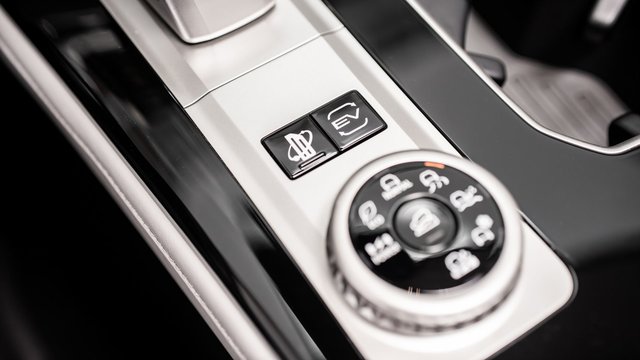
Both 2026 Outlander models come with Super All-Wheel Control (S-AWC) — Mitsubishi's patented AWD system with driver-selectable modes. The Outlander PHEV goes further with seven selectable modes (Normal, Eco, Tarmac, Gravel, Snow, Mud and Power), compared to six on the gas Outlander. The PHEV's twin-electric-motor layout also delivers instant torque to all four wheels, which feels particularly confident on slippery surfaces.
For Thunder Bay winters and the gravel access roads north of the city, both vehicles are well-equipped. The PHEV has a small capability edge thanks to its dedicated Power mode and instant electric torque; the gas Outlander keeps things simpler and still handles everything Northern Ontario throws at it.
The 2026 Outlander PHEV ES trim qualifies for the new federal Electric Vehicle Affordability Program (EVAP), introduced in February 2026. The incentive for the Outlander PHEV ES is up to $2,500 on a purchase or 48-month lease, with prorated amounts for shorter lease terms. The gas Outlander is not eligible for the EVAP incentive.
For buyers who plan to keep their vehicle long-term, this rebate narrows the price gap between the gas and PHEV models considerably. Confirm current program details with our team before you sign — eligibility rules and funding can change.
Choose the 2026 Outlander (1.5L Turbo Mild-Hybrid) if:
Choose the 2026 Outlander PHEV if:
Both vehicles keep the 7-passenger seating, Super All-Wheel Control, big cargo capacity and three-row flexibility that make the Outlander family a strong pick for Thunder Bay families. The difference is really about how you refuel — gas pump or power outlet.
The best way to decide is to drive them back-to-back. Our Thunder Bay Mitsubishi team can pull a 2026 Outlander and a 2026 Outlander PHEV out at the same time so you can feel the difference yourself — on the same roads, with the same passengers.
Reach out to our sales team or drop by our Thunder Bay showroom to book a side-by-side test drive. We will help you work through the charging question, the tow requirements, and the EVAP incentive to find the Outlander that fits the way you actually drive.
Gravel roads, cottage laneways, and rain-slicked highways are part of daily life across Ontario. If you’re weighing a...
A plug-in hybrid three-row SUV sounds like a commuter vehicle first and a trailer-hauler second. If you’re weighing the...
Choosing a subcompact SUV trim often comes down to one question: which safety and convenience systems actually come...